A mixed bag

All posts in the A mixed bag category

Such a Nice Bad Day…

Published January 21, 2018 by Nan Mykel

Today I rear-ended a man’s van or car or something on my way back to Athens on Route 7 from my weekly visit to take Mandy out to lunch. I don’t believe he had his rear or turn lights on because surely I would have noticed him sooner than I did. That’s another way of saying I totalled my car. He was making a left turn into his driveway or something. I couldn’t understand why I couldn’t start my car afterwards to get off the road. I asked the policeman* why my car wouldn’t start, and he said, “You haven’t looked at the front of your car, have you?”  I was also without my cell phone or phone book.

GOOD THING:  had my seatbelt on, so am alive, walking, talking and blogging. Also had my up to date drivers license with me.

The policeman* asked if I knew where I was, what the date was, and what road I was on..

GOOD THING:   I came up with three correct answers

The policeman asked me how I was feeling

GOOD THING:  I said “sad.”

The closest towing company was 3/4 hour away, in the opposite direction of my goal: Athens.

GOOD THING:  People asked if I was okay and the tow truck man drove me about 5 miles closer to Athens and then used his cell phone in a series of calls to friends in Athens, to no  avail. He said his mother-in-law lived very nearby, and he drove us  there and I was given a heavenly piece of fruit cake his mother-in-law had baked. 

I had a lot of junk in my car, much of it for Re-Use Industries. I was still stranded 45 minutes from Athens, with no local taxi or bus service. In the [now] dark I temporarily misplaced my credit card and condo key

GOOD THING:  Found my credit card and condo key in the dark. Using his cell phone, he found an Athens cab company that would be willing to get me and accept a credit card.  The tow truck driver had a handy very heavy-duty bag for retrieving things from my wrecked car.  He had gotten another call so couldn’t wait with me (at his mother-in-laws) for the cab to arrive. He maintained contact with the cab company, however, so there wasn’t a missed connection. The cab driver loaded things into his cab and when we arrived at my place unloaded them.

I slipped and fell down a muddy hillet going to my door, When I fell I just lay there a minute, collecting myself.  I think he feared I might be unconscious but I assured him I was just “resting.”  I rode my bottom part of the rest of the way.

GOOD THING:  The cab driver didn’t squawk over a $2 tip, then took the rest of my things down the hillet to my front door; last, he opened my walker so I could make it to the very bottom of the hillet.  

That’s why I feel so good about a bad day.

P.S. In case you think I’m uncaring, the man’s van was sill running, he said he thought his neck hurt, and EMS took him away.  A child and a large dog were unhurt. At one point he got out of his van on his own.

*Probably state trooper

I put this image on my last post…

Published January 20, 2018 by Nan Mykel

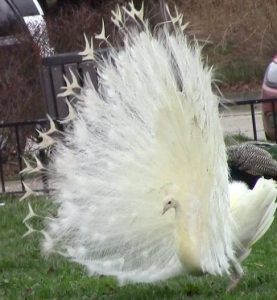
And  got the feeling that if I were looking at this image when I died I would surely die with a smile on my lips and peace in my heart.  It’s like a glimpse into the truth, I guess, whatever that is, or like an emergent aspect of consciousness.  This is coming from a Unitarian atheist…

BEAUTY — a haibun

Published January 18, 2018 by Nan Mykel

WHERE DOES BEAUTY COME FROM?

From evolution, where else?  How do  beauty/culture/evolution interact?  With botox, puffed up lips, wrinkle-remover.  How many “Sexiest Man Alive” magazine covers have I seen?  Sex, and it is not missing in the wild, with colorful baboon bottoms and robins’ breasts, enticing.  We may find a white peacock lovely, ignorant of the sexual function of animal attraction.

The earliest hint I can find of the experience of beauty  is the appearance of attraction to babies with “cute faces,” which had already appeared on earth at least by the time of the dinosaurs.  Evolution’s goal in that case is so parents wouldn’t eat their offspring. Good thinking!

Some people can appreciate beauty in art, music, poetry, dance and nature.  To me it feels like there’s a little-used nerve inside that turns on and flows warmly in my chest area. It seems to feed me.  But I can’t attend to beauty when I’m cold.

E.O. Wilson speaks of the creative arts being the “true and beautiful.” Is there a connection?

bird on the canvas

the serenade of bird song

Mother’s loving  smile

An Incident — Part 6 of 6

Published January 18, 2018 by Nan Mykel

My son Ian and his wife Laura participated in the final scenario reported here. They were coming home from running errands and turned into our driveway just as a police car was approaching. The cruiser pulled in behind them. Ian was wondering if he had done something deserving of a ticket when he heard screaming.

Mandy was running around the back yard,shouting frantically and waving her arms. Ian and Laura scrambled out of their car and the officer scrambled out of his right behind them. “What’s going on here?” he wanted to know. Ian and Laura were curious, too.

Mandy pulled herself together sufficiently to gasp, “There’s a bat in the house!” With that, she led the way in through the back door and suddenly Laura screamed. At that, Mandy resumed screaming. The bat was swooping again.

In the livingroom, oblivious to all the excitement, lay Mike, Mandy’s boyfriend, asleep on the sofa.

The officer stared. “What’s wrong with him?”

Ian shrugged. “Oh, that’s just Mike.”

Laura pointed to Bubba the cat, who was drinking from a fish bowl whose water level was alarmingly low, and gave a little hysterical laugh.

The officer was bending over Mike. “Is he okay?” Laura explained the sedating effects of Mike’s medication while Ian observed the bat entering and leaving the room, swooping up and down the staircase.

Our representative of law and order decided to take charge of the situation. He assigned Laura the task of checking on Mike, grabbed a broom from the kitchen, and directed Ian to open all the windows. He then began following the bat as it swooped around the house.

Ian later recalled suspecting that the officer was checking all the rooms to be sure there were no more bodies lying about.

Laura got Mike to sit up, Ian continued throwing open windows and doors, and all the while Mandy was running back and forth from kitchen to back porch, issuing tearful  wails. Finally the bat man successfully rid the premises of the uninvited creature and then departed, after giving Mandy a fatherly lecture to the effect that bats are our friends.

Mike went back to sleep.

Years have passed, and now Mandy’s dramatics are happily limited to shouting “Yes! Yes! Oh, yes!” a la the Herbal shampoo commercial. But, please remember…Mum’s the word. This article doesn’t exist.

*Appeared previously in Pickin’ Fleas.

With big sister Lili

With big sister

THE END

Heaven’s Very Special Child – Mandy – Part 4 of 6 – Nan’s re-blog

Published January 18, 2018 by Nan Mykel

A congenital heart defect was noted during Mandy’s first office visit. Again, I asked if there was any treatment for it. “It’s a terminal condition, usually, by eight or nine.”
The words were so frightening to me that I gave up my Graduate Teaching Assistantship for one quarter, and only took one course that spring. Mandy was bundled into a laundry basket with a clear plastic cover, and taken to a friend who watched her while I was in class. This same friend had treated my husband and me to a dinner at Everybody’s restaurant while she stayed home with Mandy and mopped my kitchen floor. With such good friends, anything is possible!
One of my professors told me about an acquaintance who used to say that if he ever was reincarnated he wanted to come back as a Down’s baby. I suspected he was lying. Later I was able to see his point.
The young mother of a mongoloid boy in my church came to call, with informational articles on Down’s syndrome and community resources. Through her we very early were connected with the Elaine Clark Center in Atlanta. Mandy was less than three months old when we began a parent’s group with other parents of variously handicapped children, of different ages. When Mandy was born I had thought bitterly that “No one had better tell me I should be glad it wasn’t worse,” but gradually I came to embrace that belief.
Mandy and I were vacationing with friends in North Georgia in September, when she developed a high fever. It was Sunday, and we drove to the nearest hospital. The on-call doctor listened to her chest, and his expression tightened. “She has pneumonia. These children bring so much sorrow and hardship on their parents and families.” He was angry. It was obvious that he thought she had no right to live. He gave her a penicillin shot, however, and her pediatrician met us at his office in Atlanta and hospitalized her. She was packed in ice, and I had my first of several hospital experiences with her. The helpless pain of seeing one’s child in a foggy oxygen tent, out of physical touch was wrenching. Miraculously, she recovered.
She was back in the hospital with pneumonia New Year’s Eve. The life or death struggle was wearing on us all.
The most painful hospital visit of all was her overnight stay in intensive care, after having gotten into her Lanoxin. She had just learned to navigate around the room, and I had left it out. The torment of that particular night was my guilt. Thankfully, again, she pulled through.
I had had sufficient extreme anguish in the intensive care waiting room thinking of her being isolated with strange faces and stranger machines. I knew she would be terrified. The next morning they allowed me to peek in. She was sitting up, held by a nurse, eating breakfast with vigor, and happily waved to me while she continued eating. That, too, was a lesson.
Mandy was four when she and I visited a planned community in the mountains of North Carolina, preparatory to possibly moving there. A local doctor had a cabin for rent. I contacted him by phone. I explained my circumstances and mentioned Mandy’s heart condition. “It’s terminal.”
“What kind of condition?”
“The usual defect associated with mongolism.”
“There’s an operation that’s been developed for endo-mitral valve defects, the most common heart defect with mongoloids.”
He gave me a name to contact and so it was that, living as I did about three blocks from Emory University’s Eggleston Children’s Hospital, I learned that treatment for Mandy’s terminal condition was available from a doctor in my own neighborhood. But it had to come from an unknown doctor in a tiny backwoods mountain community. Such are the mechanations of fate.
Our pediatrician was re-contacted and referred us to the Scottish Rite Hospital in Atlanta and a heart catheterization was scheduled. It might be too late for the operation. In order for it to work, it had to be performed before a certain point had been reached. They thought it was quite possible that Mandy had reached that point.
Time dragged. The delay of the catheterization, then the delay of feedback of the results. I was prepared for the worst. Surely they would not delay good news for months!
The news, when it was finally delivered, was good. There was still time for the operation. I met with Dr. Williams, who would do the surgery. “Mrs. Mykel, I won’t lie to you. Her chances are 66 to 33 of Mandy making it. There’s 33 chances out of 100 she won’t. Your alternative is to watch her growing weaker and blue and she’ll finally die. It can be pretty hard on the whole family to live through that.”
I knew I couldn’t take it. “I want the operation.” During those days I couldn’t discuss anything about Mandy’s illness without crying. Once when I called the nurse for admission details, I was almost unintelligible. Obviously this was quite frightening for the other children, as well.
Mandy went into Eggleston Children’s Hospital 3 blocks from our home in Atlanta on February 2, 1977. The night before her open heart surgery, parents of another child who had undergone open heart surgery and survived visited us in the hospital. They described the procedure, what to expect and how I would learn the results. They told me that the most dangerous time was when the heart needed to take over on its own again, at the end.
Heidi visited both me and Mandy the day before the operation. She had a huge Raggedy Ann doll she used to demonstrate the scar stitches, and the drainage tubes to expect. For some reason I never understood, Mandy’s chances for survival changed the night before the operation to 50-50. Dr. Williams explained that if she survived there was no guarantee that her heart was reparable. It all depended on whether there was enough tissue in the right place to use in repairing the valve.

Mandy

Mandy

Early the next morning a tall orderly wheeled tiny Mandy off. This was it. I might never see her again. I stepped toward the elevator in time to see the elevator doors close. Only the little red top of her head was visible for a moment and then hours followed upon hours, when friends, knowing how long the wait would be, sat with me. About five hours later, Dr. Williams appeared with a smile on his face. “She’s doing fine.”
The parents who visited prior to the operation hadn’t told me in so many words about the 24-hour crisis period following the operation. I happened to be in the area each of the two times that Mandy’s heart stopped following surgery. It was successfully massaged back to life. Mandy is well now and has made up for her earlier frail stature due to her bad heart. The pneumonia vaccine has been developed and she hasn’t had a bout with pneumonia for four years, [make that 40 years] and then it was only “walking pneumonia.”
What of the life ahead of her? She’s moderately retarded, which means she can never be totally self-sufficient. On the horizon will be decisions about sterilization, an ethical question I would rather not have to deal with.

to be continued

Mandy Part 3 of 6 (“Heaven’s very special child”) Reblog by Nan

Published January 17, 2018 by Nan Mykel

PLEASE READ PART 4 AFTER 3 — OUT OF ORDER.

The doctor said,  “Mrs. Mykel, Amanda is mongoloid.”
I closed my eyes and put my head back against the pillow. I felt a new room open up inside me, a new part of my experiencing self. My identity had changed. I was now the mother of a retarded child. I listened as the doctor droned on about certain medical indications they had checked, because it was important to be sure, right away. He spoke of certain medical problems that would prevent us going home that day. “These children usually don’t have the reflexes other children have, and she may not be able to swallow or sneeze. You may have to force feed her, and she probably won’t be able to nurse.
“It’s common for congenital heart defects to appear in these children during the first few weeks, and there’s no treatment for that. She’ll get respiratory infections very easily, and the Hong Kong flu this winter, for instance, could finish her.”
I looked at him. This was very difficult for him, too. “How severely is she retarded?”
“Mrs. Mykel, mongoloid is mongoloid, and she’s almost certainly mongoloid. During the night we had experts going over her with a fine tooth comb, and there’s really no doubt. She has all the signs, including the simian crease on her palms.” He looked kindly at me. “I’ll be back tonight to talk further with you, and your husband.”
My husband. I reached for the phone. “Come. Come. Come.” I could say no more. I had started crying. The nurse came in. “I understand your eyes are hurting.”
I looked at her, puzzled, and then remembered the great earlier physical pain in my eyes. I shook my head. “Oh, that’s nothing.” The pain had so greatly receded from consciousness as to be insignificant.
The nurse touched my arm. “Go ahead, cry, it’s good for you.” She handed me a Kleenex. “I have a friend who had a child like yours several years ago, and someone sent her a poem in the mail that helped her a lot.”
I looked up. I needed anything. “Could you get it?”
She nodded, and began dialing. As she listened, she wrote, and handed me the poem. It was called “Heaven’s Special Child.”
Several minutes later my husband rushed in. He had been severely frightened by my cryptic tearful call. “Amanda is mongoloid.”
“Is the okay?”
I nodded. “I thought she’d died when you called.” (Later, a friend was to say he may one day wish she had.)
My happy roommate’s joy was a rather overwhelming point to my counterpoint, and I requested a private room. The nurse nodded. “I don’t know if one is available, but I’ll make it available!” She left and shortly returned to wheel me into my own room.
My sister and her husband, puzzled by my failure to call back, had driven to the hospital, and walked in. “Amanda is mongoloid.” My sister endeared herself to me forever by bursting into tears.
“Are you sure? We just got a glimpse of her and she was cute.”
I nodded. Yes.”
And then my baby was brought to me. After our first brief meeting with her after birth, I had no further contact with her as “normal.”
The doctor said her condition was known as Down’s Syndrome, but I didn’t like saying that, or thinking that initially; it was like pretending she wasn’t mongoloid. I received my mongoloid baby in my arms and felt an impulse to protect her from the world. I wanted to “unbirth” her, not to kill her but to protect her in my warm protective environment.
She made small nursing attempts. It was too early for my milk to be down, but I was encouraged by her movements. I felt such an overwhelming need to have her next to me, nestled atop of what had been her resting placed for nine months. I looked at the nurse. “I’d like rooming in. I’d like her to sleep with me.”
The nurse nodded. Two miracles happened that day. First, an unavailable private room materialized for me, and second, hospital rules were stretched so that mother and child slept together within the same hospital bed all night. It was tremendously therapeutic for me, and Amanda seemed quite content with the arrangement..
During those first hours, I struggled inside how to respond to Amanda. My answer came, “she’s my baby.” I knew that caring for her was gambling a big part of myself, but the die was cast. She was my baby.
The doctor returned that night as promised, and spent a half hour providing us with information about mongolism. I was hesitant and frightened, but I had to know. “What are her chances?”
“Ninety to ten.”
In my defensive need to hear the best, I translated those odds to ninety chances of making it. In fact, I recall thinking that those odds weren’t so different than the odds of normal babies. I nodded but did not clarify. He gave me a pediatric appointment sooner than most, to check on any side effects that might show up early.
During the second day, my husband and I grappled with the event. A new baby had come to life, and yet we both felt someone had died. I had a great deal of difficulty processing the event, trying to put it into perspective.
At one point I told myself I should not mention to my friends that Amanda was mongoloid, because it detracted from the greater news she’d been born. A psychologist friend pointed out that my friends would be interested in anything that affected me. We also realized that our expectations for the baby had died. It was the baby of our fantasies who had never really existed this time, who had died.
Taking Amanda, or Mandy, into our lives was a gradual process. I was pretty for almost a month: my pupils greatly dilated from the shock. Knowledge about the condition helped me realize that Mandy was always Mandy, not a girl who had earlier been normal. From the first cell division she was destined to have certain physical and mental parameters. I learned that all the human eggs that a woman has are present at first ovulation, so I figured there was never a chance for the egg that was to be Mandy, to have been fertilized earlier. In a way, she never had a chance. In another way, the only option for her was to be or not to be, and I determined that being, for her, would be a good experience, better than not being.
When my oldest daughter heard that Mandy was retarded, she said, “She’ll always get a lot of attention, without doing anything.”
Those were wise and prophetic words. Our three older children have had to share a large part of their own parenting with Mandy, with natural resentment. The love has outweighed the resentment, however.

CONTINUED :  No. 4:  TERMINAL HEART DEFECT?  (sorry, slightly out of order. Please do read after Part  3


Heaven’s Very Special Child — Part One of Six, Reblog by Nan

Published January 16, 2018 by Nan Mykel

A meeting was held quite far from Earth!

It’s time again for another birth.

Said the Angels to the LORD above,

This Special Child will need much love.

His progress may be very slow,

Accomplishments he may not show.

And he’ll require extra care

From the folks he meets down there.

He may not run or laugh or play,

His thoughts may seem quite far away,

In many ways he won’t adapt,

And he’ll be known as handicapped.

So let’s be careful where he’s sent,

We want his life to be content.

Please LORD, find the parents who

Will do a special job for you.

They will not realize right away

The leading role they’re asked to play,

But with this child sent from above

Comes stronger faith and richer love.

And soon they’ll know the privilege given

In caring for their gift from Heaven.

Their precious charge, so meek and mild,

Is HEAVEN’S VERY SPECIAL CHILD.

by Edna Massionilla December 1981 The Optomist- newsletter for PROUD Parents Regional Outreach for Understanding Down’s Inc.

The above is Part One of  six.  It has been hidden on one of my many pages and rarely visited.


Would you like your great-grandchild to be a robot?

Published January 14, 2018 by Nan Mykel

From Edward O. Wilson’s Consilience: “Thanks to advances  of genetics and molecular biology underway, hereditary change will soon depend less on natural selection than on social choice….The prospect of this ‘volitional evoltion’ –a species deciding what to do about its own heredity–will present the most profound intellectual and ethical choices humanity has ever faced….humanity will be positioned god-like to take control of its own ultimate fate. It can, if it chooses,  alter not just the anatomy and intelligence of the species, but also the emotions and creative drive that compose the very core of human nature.(p. 299-300)

Other than the repair of disabling defects, they will resist hereditary change.  They will do so in order to save the emotions and epigenetic rules of mental development. , because these elements compose the physical soul of the species. The reasoning is as follows: Alter the emotions and and epigenetic rules enough , and some people might seem “better,” but they would no longer be human. Neutralize the elements of human nature in favor of  pure rationality, and the result wold be badly constructed, protein-based computers. Why should a species give up the defining core of its existence, built by millions of years of biological  trial and error? (p 303)

Wikipedia tells us that “Throughout history, it has been frequently assumed that robots will one day be able to mimic human behavior and manage tasks in a human-like fashion. Todayrobotics is a rapidly growing field, as technological advances continue; researching, designing, and building new robots serve various practical purposes, whether …

The ambition of modern robotics goes beyond copying humans, beyond the effort to make walking,talking androids that are indistinguishable from people. Future robots will have superhumanabilities in both the physical and digital realms.  From pr for new book.

Thre’s discussion about making a robot that can be your friend…It’s been pointed out that sex robotics would free up a lot of time taken for dating, but spare time won’t be a problem, due to jobs being replaced by robots.  Do any followers of this blog have thoughts about robots?

I Need to take a Stand……

Published January 13, 2018 by Nan Mykel

Opposing our president’s racist and gutter language this week, tho it remains unclear if he hates non-whites more than the poor.  How would he act toward a poor white Norwegian? I hope his doctor  can clarify his condition clearly and with helpful recommendations.

Scottie's Playtime

Come see what I share

Chronicles of an Anglo Swiss

Welcome to the Anglo Swiss World

ChatterLei

EXPRESSIONS

Anthony’s Crazy Love and Life Lessons in Empathy

Loves, lamentation, and life through prose, stories, passions, and essays.

The Life-long Education Blog

Let's Explore The Great Mystery Together!

Ned Hamson's Second Line View of the News

Second Look Behind the Headlines - News you can use...

Evolution of Medical profession-Extinction of good doctors

choosing medical career; problem faced by doctors; drawbacks of medical profession;patient tutorials

Petchary's Blog

Cries from Jamaica

Memoirs of Madness

A place where I post unscripted, unedited, soulless rants of a insomniac madman

Life Matters

CHOOSE LOVE

Mybookworld24

My Life And Everything Within It

Mitch Reynolds

Just Here Secretly Figuring Out My Gender

Frank J. Peter

A Watering Hole for Freelance Human Beings Who Still Give a Damn

Passionate about making a difference

"The only thing that stands between you and your dream is the will to try and the belief that it is actually possible." - Joel Brown

Yip Abides

we're all cyborgs now

annieasksyou...

Seeking Dialogue to Inform, Enlighten, and/or Amuse You and Me