Archives

All posts by Nan Mykel

Test Your Creativity

Published June 27, 2016 by Nan Mykel

When I was in graduate school my professor Morgan Worthy Ph.D. published a book on creativity.  If my memory doesn’t fail me, it was called Aha!  Tonight while readying for the carpet installers, I came across a page from it and thought I’d share:

Flexible thinking aids creativity:

No. 80

___1.Catch at                                        A. Saying grace

___2.Jet set                                           B. Roll call

___3.Seven come eleven                     C. Persian conversing with Siamese

___4.No tab sent                                   D. Quick hatch

___5.Name dropping in Monaco       E. Present


No. 81

___1.Out and out                                   A. Of flight

___2.Monologue                                    B. Bourbon Street

___3.Parallel bars                                  C. Solid state…………I can’t figure this one out

___4.Hashed                                           D. Double play

___5.Lenient sentence                          E. Fun house


No. 82

___1.Snow bank                                      A. Trust company

___2.Rear view                                       B. In an atomic nightmare

___3.For altogether                               C. She has a good voice

___4.Fall outfits                                     D. Book by Dr. Spock

___5. Put out the best silver                E. Get loan without collateral


No. 83

___1.Fighter plane                                A. Whistle

___2.Banker                                           B. Hopefully not horizontal

___3.Refuses                                          C. Fancy Pool shooter

___4.Electrical inspector                     D. Circuit judge

___5.Bullet                                              E. Article in magazine


When you have finished, make up your five:

___1.                                                           A.

___2.                                                          B.

___3.                                                          C.

___4.                                                          D.

___5.                                                          E.


Here’s more:  Aha!: A Puzzle Approach to Creative Thinking available in Hardcover, Paperback at Barnes and Noble


LITTLE BOY WITH A DOG’S TAIL

Published June 26, 2016 by Nan Mykel

The following was written by me  62 years ago.  I’ve been going through old stuff prior to having a new carpet installed, and came across this. I  had sent it to the editor of a children’s magazine and it was rejected with a concern for children’s castration fears!

One time there was a little lad

who cried because he was so sad.

Don’t you dare call him a sissy,

My little Mister and Missy!


Because you would cry, too, I’ll bet

If, looking very close, you met

Yourself waving, in the mirror,

A doggie’s tail, covered with fur!


That’s just why this dear little boy,

Looking at it, lost all his joy.

He knew people would laugh and shout

When his doggie tail waved about.


He cried, “Oh, Mommy! Cut it off!

I’ll have no doggie tail, by troth!”

His mother opened her eyes wide

And smiled when she his tail espied.


“Why, cut off your lovely dog tail?

Indeed, you make my old heart fail!

No other boy can e’re maintain

Such a nice royal, shaggy train!”


The boy stood straight and laughed aloud;

He stroked the tail and looked real proud.

Said he, “Yes! I can use it for

Climbing up our old Sycamore!”


And whenever someone laughed at him,

He smiled a small pitying grin–

As if to say “You poor, poor boy,

You have no dog tail to bring joy!”


And later on the tail dropped off–

(He sneezed and coughed a too-big cough)

And you know, I really believe

He was sorry the tail did leave!

On the Road – A Poem

Published June 26, 2016 by Nan Mykel

Sounds carry. Tucked asleep into my first berth,

I have no ticket to ride, no known destination.

Black-capped conductors, uniformed and faceless,

pass silently all night down darkened aisles.

The gentle jostling of the carrier and its faraway

howling are fast becoming deja vus.

Baby has a mouse in her mouth, but leave it.

She may need the protein.

Sprouting myelin sheaths encoding both

memories of dreams and dreams of memories

pulse in concatenation with the tempo

of the great clickety clacking conveyor.

Faces of inaccessible passengers

flash past on other lines, here and near, then gone.

Zhivago futilely bangs on the window

for Lara’s attention, then terminal separation.


Nan Mykel  9-7-09


The Weed’s Song

Published June 25, 2016 by Nan Mykel

   THE WEED’S SONG

                                                      beard-1161823__180                                   Pixabay

I am a weed

of common breed

(they say).

I pop up in

unsuspecting beds

beside John Quills

and Daffy Dills,

shamelessly uninvited guest

forever taken by the quest

of brand new beds

for my many heads.

In short–or tall,

spring–or fall,

I thrive!

Or, contrary weed

of specious breed,

(I may)

stay forever.

Nan Mykel previously published in Grab-a-Nickel 2004

Loren Eiseley Quote

Published June 25, 2016 by Nan Mykel
imagesCreative Commons

It is not because I am filled with obscure guilt that I step gently over, and not upon, an autumn cricket. It is not because of guilt that I refuse to shoot the last osprey from her nest  in the tide marsh. I posses empathy; I have grown with man in his mind’s growing. I share that sympathy and compassion which extends beyond the barriers of class and race and form until it partakes of the universal whole. I am not ashamed to profess this emotion, nor will I call it a pathology. Only through this experience many times repeated and enhanced does man become truly human. Only then will his gun arm be forever lowered–“The Lost Notebooks.”

Are Plants Intelligent?

Published June 24, 2016 by Nan Mykel

Are plants intelligent? New book says yes | Environment | The Guardian

http://www.theguardian.com › Environment › Conservation

Aug 4, 2015 – A new book, Brilliant Green: the Surprising History and Science of Plant Intelligence, was pubished by a plant neurobiologist (yes, plant neurobiologist),  ( …Are plants intelligent? Can they solve problems, communicate, and navigate their surroundings? Or are they passive, incapable of independent action or social behavior?) Philosophers and scientists have pondered these questions since ancient Greece, most often concluding that plants are unthinking and inert: they are too silent, too sedentary — just too different from us. Yet discoveries over the past fifty years have challenged these ideas, shedding new light on the extraordinary capabilities and complex interior lives of plants. (Amazon posting).

Stefano Marcuso, author of Brilliant Green, joined with Elizabeth Van Volkenburgh, an American plant biologist, Rainer Stahlberg, a German plant photobiologist, Eric D. Brenner, an American plant molecular biologist and František Baluška, a Slovak cell biologist to publish an article in 2006, Trends in Plant Science.

The authors contended that ‘the behaviour that plants exhibit is coordinated across the whole organism by some form of integrated signalling, communication and response system … [which] includes long-distance electrical signals, vesicle-mediated transport of auxin in specialised vascular tissues, and the production of chemicals known to be neuronal in animals’.

Michael Pollan, who wrote an article in the New Yorker in  Dec. 23, 2013, says for the longest time, even mentioning the idea that plants could be intelligent was a quick way to being labeled “a whacko.” But no more, which might be comforting to people who have long talked to their plants or played music for them.

The new research, he says, is in a field called plant neurobiology — which is something of a misnomer, because even scientists in the field don’t argue that plants have neurons or brains.

“They have analagous structures,” Pollan explains. “They have ways of taking all the sensory data they gather in their everyday lives … integrate it and then behave in an appropriate way in response. And they do this without brains, which, in a way, is what’s incredible about it, because we automatically assume you need a brain to process information.”

And we assume you need ears to hear. But researchers, says Pollan, have played a recording of a caterpillar munching on a leaf to plants — and the plants react. They begin to secrete defensive chemicals — even though the plant isn’t really threatened, Pollan says. “It is somehow hearing what is, to it, a terrifying sound of a caterpillar munching on its leaves.”

Pollan says plants have all the same senses as humans, and then some. In addition to hearing, taste, for example, they can sense gravity, the presence of water, or even feel that an obstruction is in the way of its roots, before coming into contact with it. Plant roots will shift direction, he says, to avoid obstacles.

So what about pain? Do plants feel? Pollan says they do respond to anesthetics. “You can put a plant out with a human anesthetic. … And not only that, plants produce their own compounds that are anesthetic to us.” But scientists are reluctant to go as far as to say they are responding to pain.

How plants sense and react is still somewhat unknown. They don’t have nerve cells like humans, but they do have a system for sending electrical signals and even produce neurotransmitters, like dopamine, serotonin and other chemicals the human brain uses to send signals.

“We don’t know why they have them, whether this was just conserved through evolution or if it performs some sort of information processing function. We don’t know. There’s a lot we don’t know,” Pollan says.

And chalk up another human-like ability — memory….

Pollan describes an experiment done by animal biologist Monica Gagliano. She presented research that suggests the mimosa pudica plant can learn from experience. And, Pollan says, merely suggesting a plant could learn was so controversial that her paper was rejected by 10 scientific journals before it was finally published.

Some of these plant neurobiologists believe that plants are conscious — not self-conscious, but conscious in the sense they know where they are in space … and react appropriately to their position in space.”  www.newyorker.com/magazine/2013/12/23/the-intelligent-plan


Wild Over David

Published June 23, 2016 by Nan Mykel

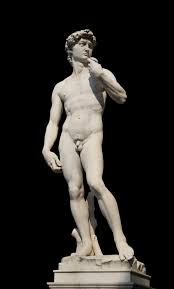
      DAVID

We always thought her meek and mild

until the day that she went wildDavid

and fell in love with an antique Greek,

or should I say a Greek antique?

She gave a moan and then a shriek

that echoed through the whole boutique

and without a pause

with hands like claws

she clasped him to her ample bust,

moved not by piety I think but lust.

As a matter of fact he was scantily clad

and to tell the truth I think she was  glad.


CAN THIS BE TRUE?

Published June 22, 2016 by Nan Mykel

My oldest daughter Sallie sent me a link to a truly astounding coincidence.  What I first saw was from You Tube: /www.youtube.com/watch?v=A_j3bVYwAp4   It seemed real, but I noticed that the date was April 1, so I felt forced to discount it.  An awful lot of people get off on playing tricks. I don’t want this site to be spoofy. I have read instances of identical twins separated at birth whose lives turn out so extremely similar that it’s hard to believe, but then genetics itself is pretty surprising.

Sallie and Nan at the airport. New Years Eve, 20152016

Then she sent me a link to a  radio program about the incident:  /www.wnyc.org/radio/#/ondemand/91686    and   http://www.radiolab.org/story/91686-a-very-lucky-wind/#commentlist

Here are several excerpts from some  of the 67 responses that describe the coincidence:

Yu from Anaheim:

There was a story of Laura Buxton who lives in England. It seems that in June 2001 she released a helium filled balloon during celebrations for her grandparents’ gold wedding anniversary in Blurton, Staffordshire, England. Attached to the balloon was her name and address and a note asking the finder to write back. Ten days later she received a reply. The balloon had been found by another Laura Buxton in the garden hedge of her home in Pewsey, Wiltshire, 140 miles away. One Laura was 10 years the other was 9 years 6 months. Both had three year old black Labradors, a guinea pig, and a rabbit. When they met t hey were the same height, had the same hair color, and were dressed in similar outfits, both wearing pink jumpers and jeans. They each had brought, unbeknownst to the other, their guinea pig with them to the meeting. Both guinea pigs were brown and each had an orange patch on their bottom. Each girl had a pet rabbit – a gray one, and a 3-year-old black Labrador .

_________________________________

Li Zhi from Cleveland

There’s so many holes in this story. Most obvious is that Jad claims that the girls are both 10, yet previously the first admitted she was only 9. Jad also admits that he selected from a long list of traits those the girls shared. Not one comment here suggests that the TV show they met on for the first time did the same thing. Do you really think they both decided to bring pets onto the stage without any prompting? Really? How about their clothes, chance or influenced by the producers? How many guinea pigs did each girl own? There’s a lot of missing information and yet a lot of comments on this ancient thread aren’t interested in finding out the facts, they want to believe what they want to believe, damn the facts. I wonder which of the girls, the one studying science and the other liberal arts, I wonder which was the one believing in miracles. The other was, not so strangely, silent – I’d hope that the science oriented mind would be more interested in facts. But I’d be stereotyping…

Jun. 17 2016 04:01 PM
__________________________________
Gene Yakub from Italy

For those who believe in coincidences these types of events, and similar ones which can be placed under “coincidence”, seem wondrously unrelated and unexpected. But to those, like myself, who know that reincarnation is a reality, everything happens as it is supposed to, as has been chose by us before each reincarnation.
How can it make sense that as we look around us, there is a continuity and a unity even in diversity that has been there since the year dot, all fits together perfectly, everything sustains everything else – or it did before we interfered.
Yet we humans supposedly live a comparatively brief life span and all our experiences and knowledge disappear into thin air with that body? Why would that be true of the most sophisticated component of all creation?
What is human life about then, what is the purpose of being alive? Just to waffle along and accumulate book knowledge so as to earn money? No, life is for learning and growing, to rid ourselves of the negative consequences of the mistaken choices we previously made (the Law of Action and Reaction, Cause and Effect) by having as many other opportunities as necessary to understand where we went wrong and correct ourselves so we can move on.
Destiny v. Freedome of Choice? No versus, they act in tandem when we have to make choices every single moment of our lives because we don’t remember what happened in a previous life except during the transition stage between one life another when we make our choices for the next one.

Dec. 04 2013 01:43 PM
______________________________________
WatchTheClock from Up

The balloon story was really interesting, but I couldn’t help but think of all of the wildlife destruction that is caused by balloons.
PLEASE don’t release a balloon. Balloon releases are “celebrating by littering.”
Dolphins, whales, turtles, and many other marine species, as well as terrestrial animals such as cows, dogs, sheep, tortoises, birds and other animals have all been hurt or killed by balloons.
More information here: http://balloonsblow.org/impacts-on-wildlife-and-environment

Jul. 14 2012 02:17 PM

_______________________________________

Gina Mireault from Vermont

I also teach Research Methods in Psychology as well as Developmental Psychology. In the latter, we explore the “uncanny” similarities between between identical twins who are reared apart. Researchers make the assumption that these similarities (e.g., using the same unusual toothpaste or drinking the same brand of beer) are genetically based, even though they would not apply such explanations to the same similarities found between total strangers (like the Laura’s in this edition of RL). I’ll use this segment in class to illustrate that coincidence works as a third variable in explaining such similarities, as well as to discuss the human tendency to “see patterns in randomness”. Thanks for an outstanding show!

Nov. 22 2009 09:21 PM
_______________________________________
Alexander Nekrasov from Purchase, NY

I have a logical explanation for this event. As a matter of fact I am convinced that the following has happened. Somebody who knows the second girl(or where the Buxton family lives)saw this balloon floating around and dropped it in front of her house not paying too much attention to the address. The fact that they turned out similar is in fact a coincidence, however this simple coincidence makes this event possible on the scale of the world population.

Nov. 27 2014 08:17 PM

___________________________________

SNOPES

http://www.snopes.com/inboxer/trivia/buxton.asp

Indeed, a farmer in Milton Lilbourne, Wiltshire — about 140 miles away from Staffordshire — had found the balloon in a hedge adjoining his property. He was about to discard the deflated balloon in the rubbish when he spotted the name “Laura Buxton” on the attached note, and knowing his neighbors had a daughter by that name, he delivered the balloon to their home instead.

But the neighbors’ daughter wasn’t the same Laura Buxton who had sent the balloon winging on its way from Staffordshire; she was a different girl who coincidentally bore the same given name and surname as the originator of the message. (Contrary to the account reproduced in the “Example” block above, the balloon wasn’t found in the Buxtons’ back yard, and both Lauras were not 10 years old at the time — oneof the girls was just short of her tenth birthday.)

Laura Buxton #2 in Milton Lilbourne, Wiltshire, wrote to Laura Buxton #1 in Stoke-on-Trent, Staffordshire, to inform her that her balloon had been found and report the unusual coincidence of that it had ended up in the hands of someone with the very same name. The two girls got in touch by telephone, and the coincidence was amusing and harmless enough that the girls’ parents arranged for them to meet face-to-face, whereupon they discovered a number of similarities beyond the two girls’ sharing a name: the Lauras were the same height, had the same build and eye color, both were fair-haired, both wore jeans with pink jumpers to their initial meeting, and both had grey rabbits, guinea pigs, and three-year-old black Labradors as pets. Both girls brought their guinea pigs (which were of the same color with similar markings) to their initial meeting.

Outside of the similarity in the girls’ names (and they didn’t have terribly unusual names), much of this tale isn’t all that remarkable: it’s hardly amazing that two girls of similar age would be the same height and build, or that two girls from the same geographic region would have the same color of hair and eyes, or that two young girls would keep the same types of animals at home (since Labrador retriever dogs, rabbits, and guinea pigs are all very common household pets). Nonetheless, the balloon coincidence led to the two Laura Buxtons’ striking up a friendship that was unlikely to have begun without it, and the girls have kept in touch ever since, with the mother of Laura Buxton #1 reporting nine years later that:

[The] Laura Buxton that released the balloon is my daughter and she is now 19 years old. The girls are still very good friends and meet up as and when time and commitments allow them — in fact, they are meeting again before they both go back to University. We have no idea why this happened but it did and out of it has come a wonderful friendship.

GIFT GIVING BY Ruth Reilly

Published June 21, 2016 by Nan Mykel

This November I went to Chicago with my daughter Vanessa to celebrate my son Gabriel’s 26th birthday along with his wife Christina, because we hadn’t been able to be together for it the last six years. September 11th had given me the strong compelling urge to see him,  be with him, to hug and kiss him again. Also, 10 months before I had had breast cancer and surgery. My chemotherapy and radiation were done and I was grateful to be alive.IMG_3623

Gabe and I had had a fun outing in downtown Chicago one afternoon and were heading back to his home. The train was crowded so we had to find separate seats which disappointed me. However, I slid into a spot next to a young black boy of about 15 who was sound asleep with his head against the window.

It was a typical big city train ride with no one making eye contact or conversing. Even Gabe had closed his eyes to rest. There was a young black man in front of me sitting in a seat facing into the aisle, He appeared to be about 30, a man of style with his shoes of black, grey and maroon, his sweater with its Calvin Klein label on it and his shopping bag from Saks.  The train jostled us along , and after awhile, the young black boy next to me shifted, putting his head on my shoulder.

As unexpected as it was, I didn’t mind and smiled a little, not moving. Shortly after, the man in front of me glanced in our direction noticing that this bespectacled, middle-aged white woman with a maroon beret and a silk scarf around her neck had a young, curly headed black boy asleep on her shoulder. He leaned in towards me a bit and said, “You can sit on the other side of me if you want. I’ll move my bags.”

I shook my head and said, “It’s OK. I’m a mother.”  I was oddly touched by this accidental connection.

But suddenly I noticed that others had noticed us, too. There was an elderly black man down the aisle facing towards us who couldn’t take his eyes off us. Behind him was an elderly Asian man staring at us also. Others were looking too and finally Gabe woke up and lifted his eyebrows in note, saying nothing.

“All are one,” the Buddhist mantra came to my mind and suddenly I felt the truth of that state Thich Nhat Hanh calls interbeing. While I also felt special, as if I had been chosen to be there at this moment,  I was clearly only a part of it. Everyone else who was witnessing this strange little scene was a part of it too. And then there was the boy. Who was this child?

The young man in front of me took all this in as well and decided to address the young boy asleep on my shoulder. “Hey, bud, do you know whose mother you got your head on?” He laughed.

But the boy never woke, never stirred.

“I think he’s exhausted,” I said. He looked clean and neat to me but thin and tired–he may have been ill.

“You’re a good woman,” the man replied getting out a dollar and stuffing it into the boy’s jacket.” …”And I thought I had had it rough.”

“A good woman?” I questioned to myself, thinking, sometimes, but but certainly not always, like most everyone else I knew.  How about just lucky to be alive and lucky, through my own terrorist attack of  cancer, to have learned the sweet moments are to be cherished?  My voice was suddenly altered with a surge of emotion when I thought to say, “These are unusual times.”

“Indeed they are,” the man responded, looking away, “Indeed they are.”

“OK Mom, this is it,”  Gabe announced as all 6’3″ of him got up to reclaim his mother a full stop before we would’ve normally gotten off.

I gently patted the young boy on the head, saying, “Gotta go,” and got up to stand by the door. But before leaving I looked back and saw him still crumpled over in the direction I had sat and wondered again–who was this child–and hoped he’d be all right.

Then as I took Gabe’s right arm with my left and walked down the street, I realized that my whole right shoulder and arm still had that warm good feeling of that young boy’s body heat in it. This was the side I’d had my surgery on, the side that still had 11 metal clips under my arm and that easily ached and stiffened….but it felt great.

I smiled, realizing while I thought I had been helping someone else out, he too had been helping me and probably everyone else who chanced to notice as well. We were all in it together – interbeingly – on a packed train at the end of a busy day in he beautiful city of Chicago.


Used by courtesy of Ruth Reilly

Addition to ME AND BERTRAND RUSSELL (Philosopher)

Published June 20, 2016 by Nan Mykel

Bertrand Arthur William Russell, 3rd Earl Russell, OM, FRS was a British philosopher, logician, mathematician, historian, writer, social critic, political activist and Nobel laureate. Wikipedia (Also no-goodnik, but I didn’t know that when I developed a crush on him and almost wrote him a fan letter in 1967.)  He died in 1970, and fortunately I never connected with him personally.  I had read his autobiography for the years 1872-1914 while depressed, and fell in love with his words, which were depressing also.  I was certainly old enough to know better, but his words really touched me. I copied 6 pages of quotes in tiny handwriting in my journal.  What turned me on? Russell Quotes like these:

,,,,in human relations one should penetrate to the core of loneliness in each person and speak to that  (p 220)

…one needs, as the key to interpret alien experiences, a personal knowledge of great unhappiness, but that is a thing which one need hardly set forth to seek, for it comes unasked. When once one possesses this key, the strange, tragic phantasmagoria of people hoping, suffering, and then dying, begins to suffice without one’s desiring to take part, except occasionally, to speak a word of encouragement where it is possible. (p 253)

ADDED 6/25/16:  (p 287): We stand on the shore of an ocean, crying to the night and the emptiness; sometimes a voice answers out of the darkness. But it is a voice of one drowning; and in a moment the silence returns. The world seems to me quite dreadful; the unhappiness of most people is very great, and I often wonder how they all endure it. To know people well is to know their tragedy; it is usually the central thing about which their lives are built.

Well, I could go on and on with these words which I related to so positively  because of my own depression. I felt a connection with his experience and him. Perhaps I felt he somehow raised the experience of my own depression to a valuable,  esteemed level.  Fortunately, as I learned later, it was best that I did not pursue contact. I read that one girl did, and traveled to England to see him and later suicided.  Moreover, in my reading somewhere a man who knew him personally referred to him as an undesirable person. (Since I cannot recall the exact word used, I won’t risk making a mistake, but it was not good).


Filosofa's Word

Cogito Ergo Sum

Scottie's Playtime

Come see what I share

Chronicles of an Anglo Swiss

Welcome to the Anglo Swiss World

ChatterLei

EXPRESSIONS

Anthony’s Crazy Love and Life Lessons in Empathy

Loves, lamentation, and life through prose, stories, passions, and essays.

Ned Hamson's Second Line View of the News

Second Look Behind the Headlines - News you can use...

Evolution of Medical profession-Extinction of good doctors

choosing medical career; problem faced by doctors; drawbacks of medical profession;patient tutorials

Petchary's Blog

Cries from Jamaica

Memoirs of Madness

A place where I post unscripted, unedited, soulless rants of a insomniac madman

Life Matters

CHOOSE LOVE

Mybookworld24

My Life And Everything Within It

Mitch Reynolds

Just Here Secretly Figuring Out My Gender

Frank J. Peter

A Watering Hole for Freelance Human Beings Who Still Give a Damn

Passionate about making a difference

"The only thing that stands between you and your dream is the will to try and the belief that it is actually possible." - Joel Brown

Yip Abides

we're all cyborgs now