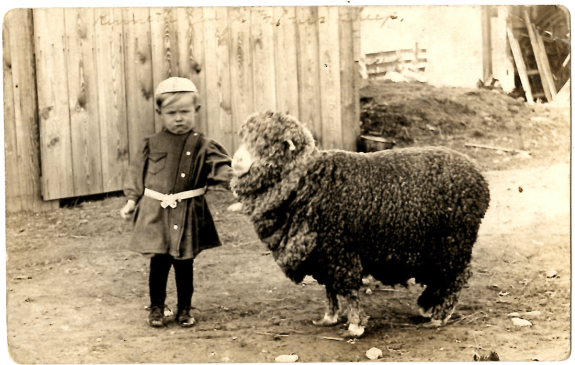
 I found it at a flea market about 40 years ago. You are seeing why I have so much in my slush pile that I have to discard before i kick the bucket?
The Dog of Pompeii
Published November 23, 2016 by Nan MykelOne of my favorite pasttimes as a child was reading a sad story to my little sister and bawling together at the top of our lungs. The most effective vehicle for this cathartic endeavor was entitled The Dog of Pompeii, in which a boy is forced to leave his dog behind on the shores under erupting Vesuvius. Our imagination constructed with horrified relish the scenario in which the dog arrives on the scene, finds his master has left him, and is engulfed in flames with great sorrow. One can only speculate as to the needs for grief expression that were met by us in this tragico-comical manner.
Where is empathy? Note JFK in rear of castor oil line
Published November 23, 2016 by Nan Mykel

Brain Bugs
Published November 17, 2016 by Nan MykelEngrossing! Thought I’d share. A re-blog.

This morning, as I was drinking a cup of coffee, a day after my 43rd birthday, I felt a convulsive scattering across the roof of my mouth.
I choked. And spit.
I looked down and saw the bug lying upside down in the light brown liquid, its legs kicking profusely.
I stared at it.
I knew what it was. And I knew where it came from.
My brain.
The bugs had been with me for as long as I could remember. They are part of my life. I don’t like it, they just are.
At first I was afraid of them. Disgusted. I could feel them crawling over the surface of my hippocampus and through the channels of my amygdala.
I used to scratch my forehead incessantly because I could feel something crawling under my skin, beneath my skull. Like something had burrowed into my nasal passages at night and…
View original post 750 more words
One of My Favorites – by Derek Walcott
Published November 16, 2016 by Nan MykelLOVE AFTER LOVE
The time will come
when, with elation,
you will greet yourself arriving
at your own door, in your own mirror
and each will smile at the other’s welcome,
and say, sit here. Eat.
You will love again the stranger who was your self.
Give wine. Give bread. Give back you heart
to itself, to the stranger who has loved you
all your life, whom you ignored
for another, who knows you by heart.
Take down the love letters from the bookshelf,
the photographs, the desperate notes,
peel your own image from the mirror.
Sit. Feast on your life.
Lumpkin’s Day
Published November 16, 2016 by Nan MykelHeart-warming. Delicious. Thanks. Am re-blogging.

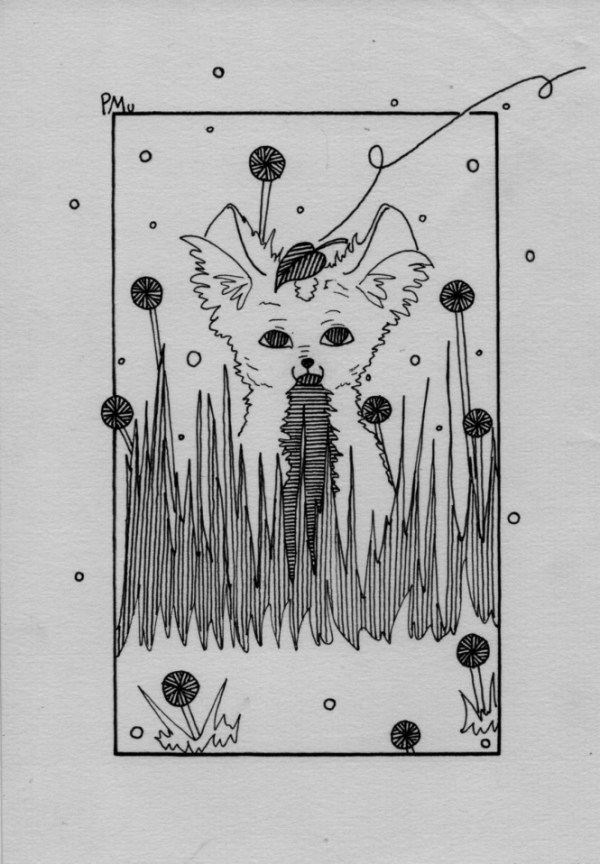
[Sketch title: Lumpkin in the Tall Grass. Artwork by PMu. Image used with the gracious permission of the artist. Please visit her site at https://pmuink.wordpress.com/ and click on “doodles” to see her absolutely fantastic sketches!]
~~
Lumpkin scratches whines and begs
while sitting by the door
there’s flowers, trees and bugs outside
oh so much to explore!
and when he fin’ly gets his wish
he races to and fro
with so much world for him to see
where should that poor pup go?
he chases dragonflies and then
digs for a bit in mud
and then he romps and wrestles
with another puppy bud
too soon the sun bids day adieu
the pup heads back indoor
there’s still so much to see and do
tomorrow there’ll be more!
and soon he’ll need to go to bed
another time of joy
for though he may not get to run
he’ll…
View original post 165 more words
When I was a little girl.
Published November 15, 2016 by Nan MykelA lovely and important message.
Power of One — Go There
Published November 15, 2016 by Nan MykelI tried to re-blog this but erred at the task. So, you go to

Power Of One
The power of one, and it isn’t me. This is my personal initiative (or conviction rather) this week. Those of you have followed my posts know I have been all over the place emotionally, mentally and even spiritually. This election has been the most challenging for me ever. It has caused me to look deeper at myself and see both the good and bad, to see the good and bad in others, to question what I think and believe, and it has triggered things from the past and continues to do so. I know I have contradictions while moving beyond the black and white of simplicity whether on spiritual, moral, ethical or societal views. It is not easy, it is a messy business.
I also know that what I am going through many others are going through as well. And what I need to separate here is that even though I am not trying to marginalize anyone, I still stand against Trump and will not move forward with those in whom promote his policy, character and agendas. Evangelicals would not place Trump in a position of power in their own church and yet many have placed him on the highest seat in US office regardless of his character. The problem I have with that is, it shows pro-birth beliefs, not Pro life. Pro Life is the celebration of all life regardless of gender, sexual orientation and race. Pro life is respect for the fact that God gave all men the choice and freedom to accept or reject Him. If God gave us this country for democracy, then he founded it with freedom for and from all religions equally as was given the separation from church and state. Pro life is celebrating and shouldering the burdens with all minority and vulnerable groups. Pro Life respects Christian, Muslim, Buddhist, Hindu, Atheist etc, religious protections, but those protections must be available for every religion. Let’s face it, I am sick of the “Holiday Greeting’ cards over Merry Christmas cards too! We should all celebrate the diversity in religion rather than minimize a specific tradition of one over another. Pro life respects the rich and poor. Pro life stands against sexual assault and its minimization. Pro Life stands up for all the children we have in our world today. Pro Life also respect the fetus, the health of the mother, fathers. This is not a black and white nor simple issue. But it will not be solved by changing the legal system to make abortion illegal. Laws are not human, all laws are not humanitarian.
Power Of One
Effects of modeling violence
Published November 15, 2016 by Nan MykelTo —
Parent’s Use of Physical Punishment Increases Violent Behavior …
http://www.apa.org › … › Violence Prevention Office › Resources & Publications Parental expectations, physical punishment, and violence among … and their own use of physical punishment (therefore modeling of violent behavior) with the …
————————————
The Power of Social Modeling: The Effects of Television Violence
christinevandevelde.com/journalism/1999bing.asp
Bing Nursery School
1999

Dr. Albert Bandura, Bing Distinguished Lecture Series
By Christine VanDeVelde
Upon meeting Snow White at Disneyland, a preschooler said to her, “You’re not Snow White, you know.” “Why do you say that?” asked Snow White. “Well,” the child replied, “if you were real, you’d be a cartoon.” Such is the power of the media in shaping children’s images of reality.
That power and its effects were the subject of a presentation by Dr. Albert Bandura, David Starr Jordan Professor of Social Sciences in Psychology, at the annual Bing Nursery School Distinguished Lecture Series, held on May 27 in Jordan Hall. Almost forty years ago, Dr. Bandura became a regular commuter to Washington, D.C., testifying in Congress about the effects of televised violence on children.
In the famous “Bobo Doll” experiments, Bandura had shown that children, when exposed to televised violence, exhibited the aggressive behavior they had observed – hitting, kicking, and using hostile language. Believe it or not, this was considered heretical, particularly by the television industry. Prior to that time, the prevailing theory was that televised violence drained aggressive impulses.
But Bandura demonstrated exposure to TV violence can produce at least four effects. First, it teaches aggressive styles of conduct. Second, it weakens restraints against aggression by glamorizing violence. When good triumphs over evil violently, viewers are even more strongly influenced. Third, it habituates and desensitizes reactions to cruelty. And finally, it shapes our images of reality; for example, only 10% of major crimes in society are violent, but on TV, 77% of major crimes are violent, which has the effect of making people more fearful of becoming crime victims. “Children and adults today have unlimited opportunities to learn the whole gamut of homicidal conduct from TV within the comfort of their homes,” notes Bandura.
So, once again, in the wake of the Littleton, Colorado, tragedy, Bandura is commuting to Washington, D.C. to talk about violent role models and their effect on children’s behavior. As he noted in his lecture, events such as those that occurred in Littleton, have created a paradox. The fear of violence is rising while, for the last seven years, crime rates have been falling. This, however, is not as irrational as it appears. According to Bandura, there are three properties of violence that instill widespread fear and all three were present in the Colorado incident.
First, there is unpredictability, no forewarning when or where violence might occur. The second property is the gravity of the consequences; individuals are unwilling to risk being killed, raped or having their child abducted, even if the probability is extremely low. Finally, there is the property of uncontrollability, a perceived helplessness to exert control. When these properties are present, a single incident can mar the quality of life in communities.
Bandura explained that historically there have been three explanations for aggression.
The “Instinct” theory asserts that people are by nature aggressive. There is no evidence of this, according to Bandura. In fact, there is further historical evidence that societies change; for example, Sweden, which evolved from an aggressive, fighting society to a pacific one. This theory, however, has popular appeal, because it removes the onus of responsibility from people for their inhumanities to each other.
The “Drive” theory holds that frustration causes aggression. This theory is widely accepted even though research findings dispute it, says Bandura. Frustration produces all kinds of reactions.
Finally, “Social Cognitive” theory posits that aversive experiences produce distress, causing emotional arousal and resulting in aggression. Bandura notes, however, that people don’t have to be distressed to aggress. Much human aggression is prompted by the material and social benefits anticipated for that type of behavior. Distress actually prompts all kinds of behavior, depending on how a person has learned to deal with stress, and most people marshall their resources to overcome the source of distress.
The fact is that there is no single cause of aggression. Violent acts are a product of a constellation of factors, such that a change in any one factor can result in the event not occurring. Therefore, if Eric Harris had been accepted into the Marines, the Columbine High School shooting would not have occurred. To assign an average weight to one particular influence, such as violence on television or video games or current gun laws, reminds Bandura of the non-swimming statistician who drowned while crossing a river that averaged two feet in depth.
What one can be sure of, though, is that when a violent event occurs that stirs the public, the TV networks will run their “dog and pony show.” Television industry spokespeople divert attention from the contributory influence of television and shift the blame to others “by invoking and flogging a single-cause theory of violence that no one really propounds,” says Bandura. In what he terms their “self-exonerating sermonettes,” it’s not easy access to weapons, but lax enforcement of existing gun laws and it’s not TV or interactive media, but detached and deficient parenting.” As a result, since no one is at fault, they all get off scot-free. Sound familiar?
In addition, sensationalistic coverage of violent crimes tends to encourage imitative acts. In a television drama, titled “The Doomsday Flight,” an extortionist threatened airline officials with an altitude-sensitive bomb that would explode if the airplane descended below 5,000 feet. Of course, the pilot outwitted the extortionists by landing at an airport above 5,000 feet. Following the broadcast, there was an eight-fold increase in extortion attempts using threats of altitude-sensitive bombs. As the program was re-run in the United States and abroad, the same pattern occurred; as a result, Qantas Airlines paid $560,000 to one extortionist and Western Airlines $25,000 to another. Adults, obviously, are equally influenced by modeling. “These criminal acts would not have occurred if it were not for the televised influence,” notes Bandura. Of course, in the wake of the Columbine High School shootings, we have experienced threats and actual bombings by students who felt they had been marginalized and disparaged, as a way of settling interpersonal grievances. Such copy cat incidences continue, according to Bandura, “until the modeled style of conduct fades from public consciousness.” This, of course, cannot occur until the “dog and pony show” ends.
One of the questions frequently asked in the wake of the Littleton tragedy is how two seemingly “normal” boys could have committed such an act. As a result of his work on violent role models, Bandura began looking at that question. “Most violent acts and large-scale inhumanities are perpetrated by people who, in other areas of their life and in other circumstances, are quite considerate in their behavior,” notes Bandura. “They inflict inhumanities on others by selectively disengaging moral self-sanctions from their injurious conduct.” According to Bandura, a “mechanism of moral disengagement” occurs. He identified tactics such as euphemistic labeling (the TV industry calling violence “action and adventure,”) which lead to the minimizing of consequences (violence is a catharsis for kids), and result in a displacement of responsibility (we’re not personally responsible, society is sick.)
“Moral control,” notes Bandura, “functions most strongly when people acknowledge that they are contributors to harmful outcomes.” His interest in this idea caused him to re-direct his research to look at “efficacy beliefs.” As human beings we must believe that our actions can produce desired effects, or there is little incentive to act or persevere in the face of difficulties. This core belief that one has that power plays a pivotal role in many areas of life. For example, children’s beliefs in academic efficacy determine their interests, motivation and accomplishments, and efficacy beliefs have equally important roles in such areas as workplace productivity and individuals’ health habits.
Bandura is currently researching efficacy in tandem with “pro-social” modeling. “Pro-social” modeling, for example, tempers aggressiveness; restrained news coverage of violent events does not result in copycat violence. Positive modeling can also foster cooperativeness, empathy, sharing, a panoply of positive behavior. In fact, in another study, Bandura demonstrated the therapeutic power of modeling in overcoming phobias. Working with young children at Bing who were phobic about dogs, he found that the combination of modeling coping strategies and carefully guided mastery experiences was an unusually powerful treatment. This therapy is now the treatment of choice for anxiety and phobic reactions.
Events such as those in Littleton cannot be prevented, says Bandura, but we can work toward reducing their likelihood. What he would like to see is each cultural subsystem take some responsibility for their part in violent events – TV, interactive media, the gun industry, parents. In the case of television, he believes strongly that the goal should be to create better programming, not to restrict material on television. But we need a much greater public commitment to this for it to happen. “Electronic media can be used to bring out the best in us or to bring out the worst in us,” says Bandura. “The tragedy is not only in violence, but in forfeiting the use of this powerful medium for human betterment and enlightenment.”
Dear Ricardo,
Published November 14, 2016 by Nan MykelSince I’m a newbie (for 2 years) I don’t know how to communicate with you other than this letter. I don’t see how to “comment,” and after your entry titled “ABSCOND,” plus that scary photo, (see below) I wanted to thank you for following me but apologize for not following you back. I Googled you and saw “your” obituary and after reading “ABSCOND” and the photo was sad but not surprised. It was a little spooky that you had died unexpectantly in October, but…
Now I see that at some point in my panic I went ahead and followed you. Seems I get myself in all kinds of trouble… To save you time, here’s “your” obituary I’m talking about, and the horrifying photo:
Richard Sexton Obituary – Burlington, VT | The Burlington Free Press
http://www.legacy.com/obituaries/burlingtonfreepress/obituary.aspx?pid=182193882
his Lord on Monday, Oct. 24, 2016 at …
BTW, I wasn’t going to follow you because it makes me feel sad and I’m sad enough : > /

