My experience of grad school was peaceful, with hope for the future. I was in the clinical psychology program at Georgia State University back in the early sixties. My kids are surprised that I never heard of Bob Ross, but I heard a lot about Fritz Perls, Transactional Analysis, T-groups, guided imagery, empathy and Psychosynthesis. I remember one of my professors saying to me, “Thank you for the gift of your anger.”
The department treated us to experience with several kinds of therapy groups. We were blessed.
I recall taking an evening course for two semesters during which we lay on the floor in threes and each received a lengthy “tap over” from the other two, before switching. Sounds like a fairy tale, doesn’t it? Graduate school was one long centering experience. I remember feeling depressed the day I received my degree.
As I look around me today, it is as though it was all a dream. Where is centering, mirroring, empathy and respect for ourselves and others, our lovely planet besmirched and dirtied by destructively delusional and angry inhabitants? I had group and individual psychotherapy, and later when asked what I got out of it, I did not hesitate. “Love.”
–Unconditional positive regard, no matter what, and it did not result in an abusive personality. Au contraire!
Shared views and histories: I’m not sure just how to structure it, but this is my first attempt.
Two questions I’ll ask myself and share. You can too, or not…
What verbal message did I receive as a child about ethics and who told me?
Have I internalized that message as a goal, modified it or rejected it?
MY RESPONSES: When I asked my grandmother if we hated Hitler, she said, “We don’t hate him–we just hate his ways.”
Whenever I recall her words I get a good warm feeling, probably because I love her for it. And yes, as far as I know I have internalized it. With the single exception of holding an emotional grudge against someone who has insulted or discounted me, I have never used my position in the work force to harm anyone.
Anyone else want to share? Sorry if I’m not structuring this the right way.
What are reasonable goals in life and how do they effect our species and maybe a few others? That’s what I want to clarify and try to understand. I’ve made my bed and lie in it, but I wonder what’s ahead for others, especially given the temper of local, state, national and world culture.
Among us animals, males compete over the most fecund females due to the strong innate drive to replicate their genes, and females who will reproduce are preferred.
In humans, competition as a drive or motivator is evidenced between the sexes, races, religious beliefs, team sports, political parties and nations. It is most jubilantly experienced in team sports. Altruism can be seen as competition’s opposite, but some have discounted that as being evidence of seeking reciprocity or improving one’s self image.
A young man looks around and is swept away in the rush and push of cultural activity. Where he places himself initially is in his family’s niche of beliefs and status. He may be initially hammered down by his family’s cultural and financial status, or heightened. Where and how will he live out his life? What is possible and important for him? Where can he fit into the mishmosh? Could he really be the leader of the pack somewhere? At home he vies for his mother’s attention, in school for grades and maybe the honor society. He knows he’s not athletic, so he’ll put that personal competition out of mind. Has he been accepted into a clique at school? Can he find a compatible wife, and if so what kind of house can he afford? Car? Will he work for himself or someone else? Does he have a family support system or no? What do his parents expect of him? How does his race help or hinder him? Will he be a good guy or a bad guy, or perhaps a good bad guy or a bad good guy? It isn’t so easy these days to clarify slots in society and to either fight against them or occupy one’s allotted place.
Perhaps he saves his money earned after school and is gifted with a small inheritance. Over a few years and family support he graduates from community college and starts a small grassroots fast food restaurant that takes off in several counties.
Now he has a wife, an average 3-bedroom house, a good used car and two children. He has turned out to be intelligent and goodlooking. It’s dicey trying to keep up with the new generation, and his wife seeks employment. Will her job reflect well on him? Television and the magazines overrun with stories about million dollar homes and new dream cars–daily, hourly. People are getting wealthy by hook or crook, many by crook.
Maybe he can expand his statewide food chain, perhaps go national. Should he go for it? Should he try to be a leader of his pack? Put his eye on bigger and richer? What else is there to shape a life, really? Surely not settle for the status quo with others scrambling over him! When he looks to the future he sees others miles ahead of him, driving expensive cars and doing the country club bit. Does he have it in him to fight his way up the corporate ladder? Can he really become a leader of the pack, or at least someone he and his family can respect? What else is there? He’s seen too much barbarianism in church, and he does not do drugs, alcohol or infidelity.
What else is there? What can he make of his life, and why, and how?
Go to the url above for the scoop. I don’t know enough to say anything about it but wow. All the recent cutting edge discoveries are making me a little nervous, however. As a member of homo sapiens I wonder if we’re getting a little too big for our britches–at least our humane britches?
I reached a milestone in human development this week–I got on the cusp of nearly almost approaching late middle age when I took 2 Pepto Bismol tablets (which are for diarrhea) to cure my constipation…..still suffering from my action.
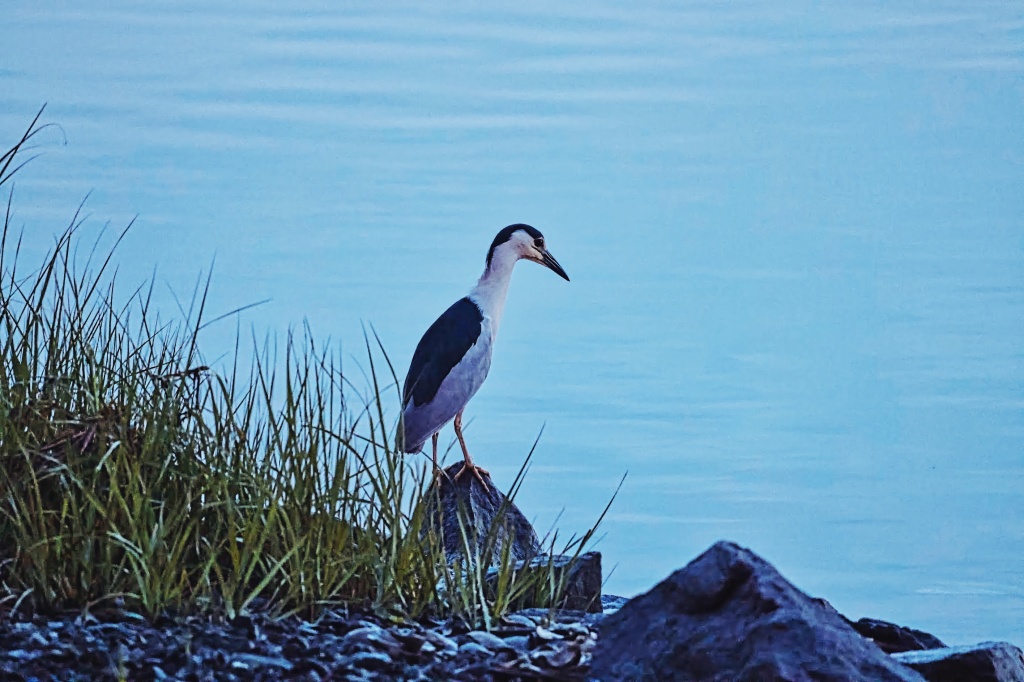
…Birds can be secretive creatures, staying high in the treetops or deep in the underbrush. Even those in plain sight often move startlingly quickly, appearing as hardly more than a flash of color, a blur of wings. Except for the background sound of birdsong, many people are never aware of how many birds — or how few — they share the world with.
Apps like iNaturalist from National Geographic and the California Academy of Sciences help to close that gap, functioning as both electronic field guides and vast data-collection devices. They learn as we learn, improving with every photo and map pin we upload, helping experts understand a planet undergoing profound change. But what of the vast number of birds we never see, those we only hear? To offer that feature — one that accurately and consistently recognizes birds by sound alone — would be the birding equivalent of finding…
The roots of the arts “date back in deep history to the genetic origins of the human brain, and are permanent.” So writes Edward O. Wilson in one of my favorite books, Consilience, 1998….
“While biology has an important part to play in scholarly interpretation, the creative arts themselves can never be locked in by this or any other discipline of science. The reason is that the exclusive role of the arts is the transmission of the intricate details of human experience by artifice to intensify aesthetic and emotional response. Works of art communicate feeling directly from mind to mind, with no intent to explain why the impact occurs. In this defining quality, the arts are the antithesis of science. (p 218)
“….Several special powers were granted the arts by the genetic evolution of the brain. First is the ability to generate metaphors with ease and move them fluidly from one context to another.” Wilson maintains that metaphors, the “building blocks of creative thought,” are the consequence of spreading activation of the brain during learning.
Wilson also recognizes the importance of our natural environment for our present and future. On page 278 he writes, “What we idealize in nature and seek to re-create is the peculiar physical and biotic environment that cradled the human species. The human body and mind are precisely adapted to this world , notwithstanding its trials and dangers, and that is why we think it beautiful. In this respect Homo sapiens conforms to a basic principle of organic evolution, that all species prefer and gravitate to the environment in which their genes were assembled. It is called ‘Habitat selection.’
“There lies survival for humanity, and there lies mental peace, as prescribed by our genes. We are consequently unlikely ever to find any other place or conceive of any other home as beautiful as this blue planet was before we began to change it.”








 NANMYKEL.COM